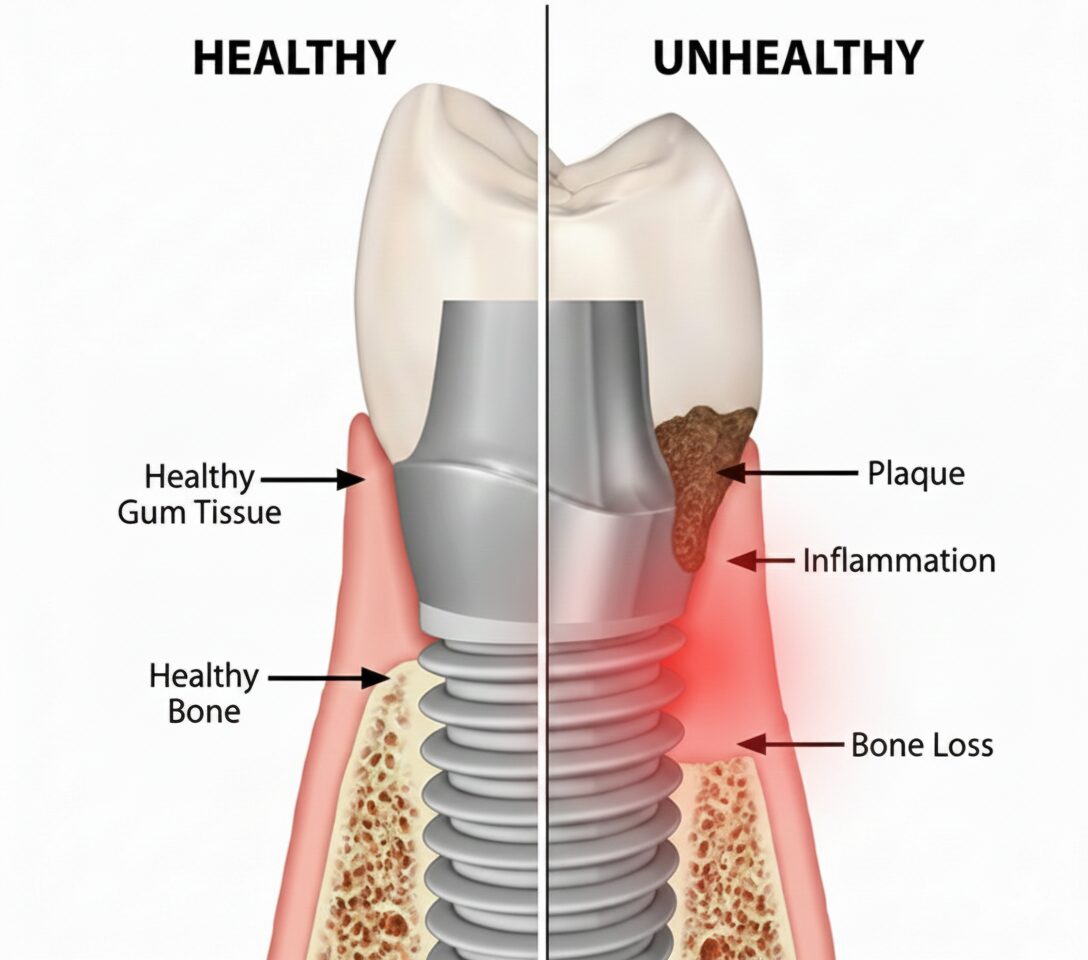
Dental implants have firmly established themselves as the gold standard for replacing missing teeth, offering patients a solution that provides unparalleled stability, functionality, and aesthetics. With success rates frequently reported to be above 90–95% over ten years, implants represent a profound, long-term advancement in restorative dentistry. However, their durability is not guaranteed solely by successful initial integration. The long-term health and survival of any implant can be compromised by a persistent biological threat known as peri-implantitis. Peri-implantitis is defined as a serious pathological and inflammatory condition that targets the soft and hard tissues surrounding an osseointegrated dental implant. It is…