

Dental implants are artificial tooth roots, typically made of titanium or zirconia, that are surgically placed into the jawbone to support crowns, bridges, or dentures. They are a popular and effective solution for replacing missing teeth, offering improved aesthetics, chewing function, and long-term stability.
However, despite their durability, dental implants are not immune to complications. Unlike natural teeth, implants do not have a periodontal ligament, which means they lack the same natural defense mechanisms. The surrounding tissue is more susceptible to inflammation, and once bone loss begins, it’s often irreversible.
Proper daily cleaning is essential to prevent plaque accumulation, which can lead to peri-implant mucositis (reversible inflammation of the soft tissue) or progress into peri-implantitis—a destructive condition that causes bone loss and may result in implant failure. Clinical studies confirm that poor oral hygiene is one of the most common risk factors for implant complications.
Therefore, maintaining strict oral hygiene around dental implants is not optional—it’s a requirement for their long-term success and stability. Unlike natural teeth, implants require a tailored cleaning approach to protect the surrounding structures and ensure they last for decades.
Understanding the Anatomy and Risks
A dental implant consists of three main parts:
– the implant fixture, which is the screw-like structure surgically inserted into the jawbone (commonly made of titanium or zirconia)
– the abutment, which connects the implant to the visible part
– and the crown or prosthesis that replaces the missing tooth.
The area surrounding the implant is called the peri-implant tissue, which includes both the soft tissue (gums) and the underlying bone. Unlike natural teeth, implants lack a periodontal ligament and blood supply through the ligament, making the surrounding tissue more vulnerable to bacterial infection and inflammation.
If proper hygiene is not maintained, bacterial plaque can accumulate on the surface of the implant and trigger an inflammatory response. This initially leads to peri-implant mucositis, a reversible inflammation of the soft tissues, which can progress to peri-implantitis if untreated. Peri-implantitis is characterized by loss of supporting bone and, in severe cases, implant failure.
Clinical studies confirm that poor plaque control is one of the main risk factors for the development of peri-implantitis.
Daily Home-Care Routine
Brushing
To keep dental implants clean and inflammation-free, patients should use a soft or extra-soft toothbrush—either manual or electric—with gentle bristles designed to avoid damaging the soft tissue around the implant.
Brushing technique matters: focus on the gum line and the implant-abutment connection, where plaque often accumulates. Use small circular motions and avoid aggressive scrubbing that could cause microtrauma.
Abrasive toothpaste—especially those containing harsh particles like aluminum oxide (corundum)—should be avoided, as they can scratch the surface of the implant crown. Similarly, excessive pressure during brushing can damage both the prosthetic and surrounding tissues.
Interdental Cleaning & Flossing
Cleaning between implants and adjacent teeth is essential. Daily use of specialized implant floss, soft interdental brushes, or a water flosser helps remove plaque from hard-to-reach areas.
Placement of these tools depends on the specific spacing between teeth and implants—what works for one patient may not be ideal for another. A dental hygienist should advise on the correct size and type of cleaning aid.

Importantly, areas around implants usually demand more attention than those around natural teeth, since implants don’t have the same biological protection against bacterial invasion.
Mouthwash / Antimicrobial Rinses
Antibacterial mouthwashes such as chlorhexidine or essential oil-based rinses can help reduce bacterial load, especially in patients with limited dexterity or early signs of inflammation. However, these rinses are not a substitute for mechanical cleaning like brushing and flossing.
Avoid harsh or alcohol-heavy rinses that may irritate soft tissues or disrupt the healing process after surgery.
Lifestyle & Dietary Considerations
Patients should avoid chewing on hard or sticky foods like ice, hard candies, or chewing gum, which can put unnecessary stress on the implant crown or abutment.
Systemic factors like smoking, diabetes, and autoimmune diseases can increase the risk of implant complications. Smoking in particular has been repeatedly linked to reduced implant survival and higher rates of peri-implantitis.
Professional Maintenance and Check-Ups
Regular professional maintenance is essential for the long-term success of dental implants. During the first year, check-ups are typically recommended every 3–4 months to monitor healing and ensure optimal hygiene. After this period, visits should occur at least every 6 to 12 months, depending on the patient’s individual risk profile (e.g. smoking, history of periodontitis, systemic conditions).
Professional implant cleaning includes:
– clinical examination of the soft tissues (checking for inflammation, bleeding, or recession),
– periodontal probing around the implant to assess pocket depth,
– radiographic evaluation to monitor bone stability,
– and the removal of plaque and calculus using non-metallic instruments such as titanium or carbon-fiber scalers, ultrasonic tips with plastic sleeves, or air-polishing devices with low-abrasive powders.
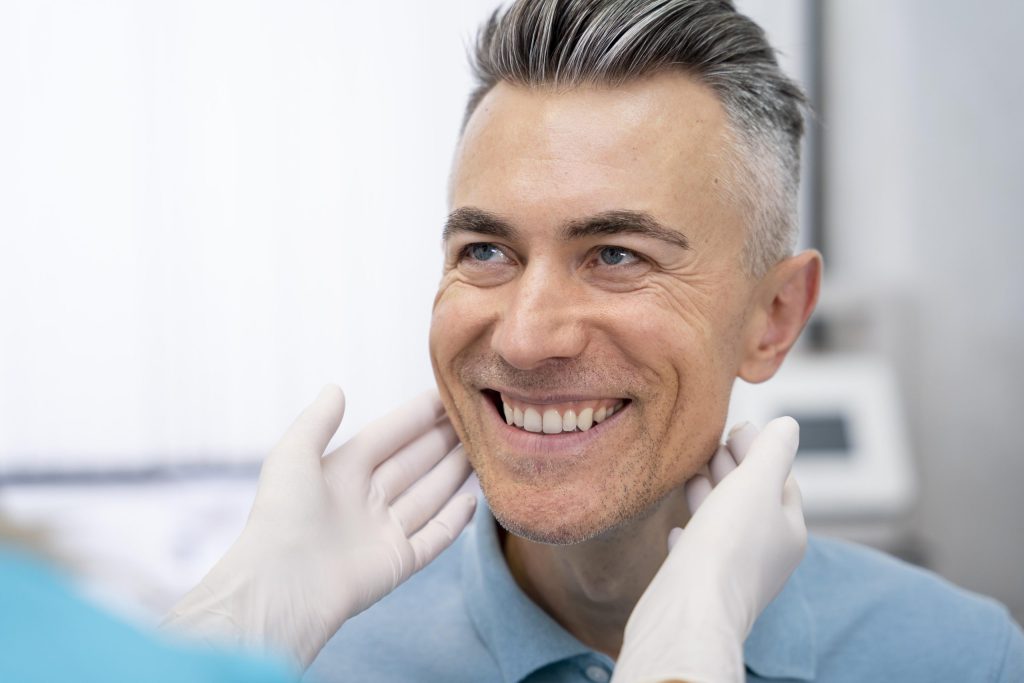
An essential part of post-operative care is establishing baseline records. This includes measuring peri-implant probing depths, taking radiographs for bone level comparison, and documenting the soft tissue condition immediately after prosthetic loading. These baseline data points are crucial for detecting changes over time and identifying early signs of complications.
Cleaning Techniques for Different Implant Types
Not all dental implants are cleaned the same way. The hygiene approach should always be tailored to the type of restoration, as each design poses unique challenges for access and plaque removal.
Single-Tooth Implant
A single implant with a crown closely mimics a natural tooth, making hygiene relatively straightforward. Patients should brush the implant crown just like a regular tooth, focusing on the gum line and the area where the crown meets the soft tissue.
Daily interdental cleaning—either with floss, specialized implant floss, or a soft interdental brush—is essential to prevent plaque buildup on both sides of the implant.
All-on-4 / All-on-6 Full-Arch Restorations
These systems involve multiple implants supporting a full prosthetic arch. While functionally effective, they present more complex hygiene demands. Food debris and plaque can accumulate beneath the prosthesis, especially at the junctions between the prosthetic and gum tissue.
Patients should use angled interdental brushes, super floss, or ideally a water flosser (oral irrigator) to clean under the bridge. Special attention must be paid to cleaning the space between the gingiva and the underside of the prosthesis, where bacteria often thrive undisturbed.
Implant-Supported Overdentures
These removable prostheses are anchored by implant attachments (like locator abutments or bars). Their removability makes hygiene somewhat easier—patients must take them out daily and clean both the denture and the implants thoroughly.
The tissue-contacting surface of the denture should be brushed gently with a soft brush and mild soap (not toothpaste), while the abutments and surrounding tissues in the mouth must be cleaned with a soft toothbrush and floss or brushes.
High-Risk Areas and Hygiene Challenges
Some implant restorations—especially fixed bridges or full-arch prostheses—create hidden areas where access is limited. These sites, such as the underside of a bridge or close-fitting connectors, are harder to clean and present higher risks for plaque accumulation and peri-implant inflammation.
In such cases, professional guidance is key. Patients should be shown the proper tools and techniques tailored to their specific restoration design. A poorly cleaned implant in these areas can easily lead to long-term complications.
Recognizing Warning Signs & When to Contact Your Dentist
Even with proper hygiene, complications can still arise—especially if care routines are not followed consistently. Being able to recognize early warning signs can make the difference between saving an implant and losing it.
Common symptoms that indicate a possible problem include:
– bleeding during brushing or flossing
– redness or swelling of the gums around the implant
– pus discharge from the gum tissue
– bad taste or persistent bad breath
– pain or discomfort near the implant
– mobility or shifting of the implant or prosthesis
Any of these signs may point to peri-implant mucositis or peri-implantitis, both of which require immediate professional intervention. Left untreated, inflammation can progress to irreversible bone loss and, eventually, implant failure.
Early treatment drastically improves outcomes. When caught in time, many issues—especially soft tissue inflammation—can be reversed with professional cleaning, proper home care reinforcement, and, in some cases, local medication.
Don’t wait for pain. If something feels off, it’s safer to get it checked than to risk the long-term health of your implant.
Dental implants are a long-term investment—but their success isn’t automatic. To ensure they last for years or even decades, two things are non-negotiable: daily oral hygiene and regular professional check-ups.
Implants may look and feel like natural teeth, but they require special care. Unlike real teeth, they lack a natural defense system, making them more vulnerable to plaque-induced inflammation.
Patients must understand that implants aren’t “set-and-forget” solutions. They demand ongoing commitment, proper cleaning techniques, and an awareness of warning signs.
Long-term success is a shared responsibility between the patient and the dental care team. With the right habits and regular monitoring, implants can remain stable, functional, and healthy for many years.